





















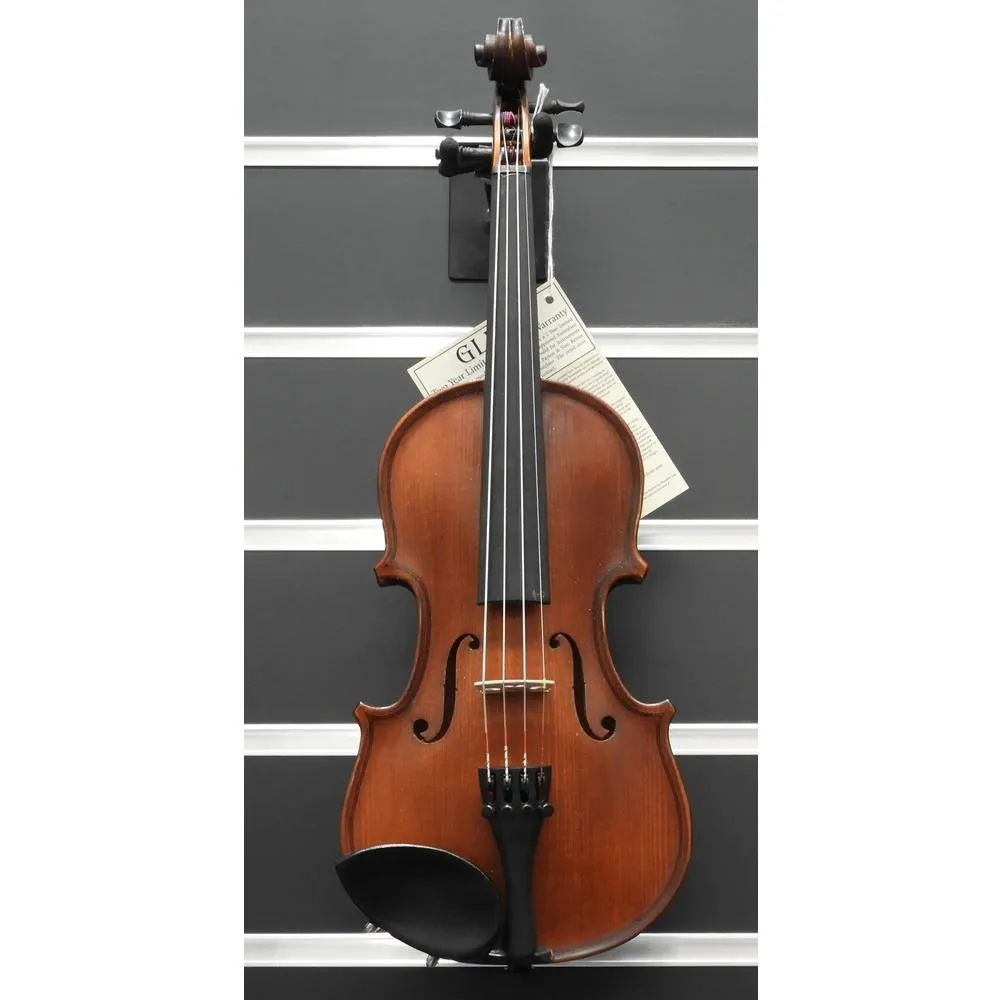

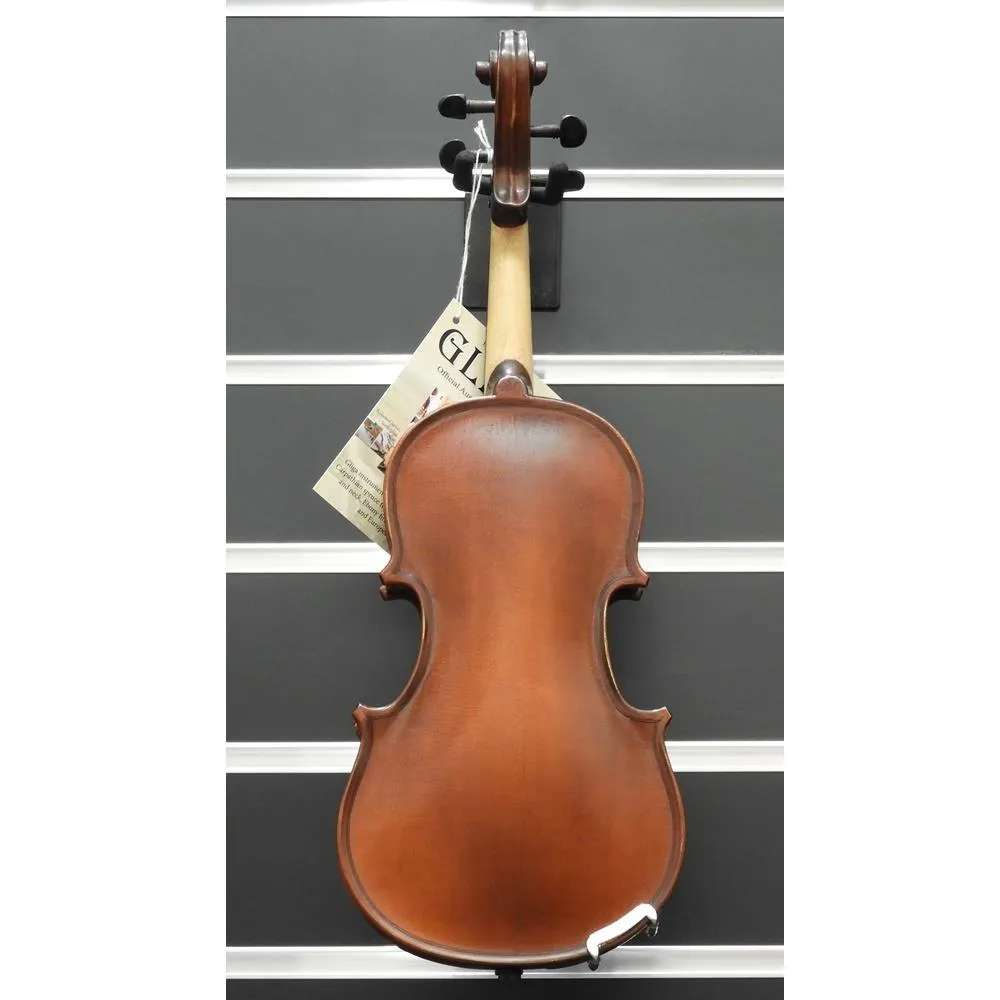

Gliga 3 Violin 1/16 Antique Varnish Outfit Setup Aubert Bridge Made in Europe
⭐ 4.9 Stars — 1,500+ Reviews | Authorised Dealer
Calculate Shipping :
Free pickup from our Melbourne Store at 4 Drake Boulevard, Altona VIC 3018. Your order will typically be ready by the next business day. We recommend calling us on (03) 8360 7799 beforehand to check it's ready for collection.
Share This Item :


Gliga III Violin Outfit - 1/16 Size Handcrafted Quality & Expert Setup
The Gliga III 1/16 is one of the smallest violin sizes available — designed specifically for preschool and kindergarten-age children aged approximately 3 to 5 years who are beginning their violin journey at the earliest possible stage. Finding a quality instrument at this size is genuinely challenging. Most 1/16 violins available are cheaply made plywood instruments that produce a poor sound and feel frustrating to play — potentially discouraging a young child before they have had a fair chance to fall in love with the instrument.
The Gliga III 1/16 is different. Handcrafted in Romania from solid tonewoods, including a solid spruce top and solid maple back, neck and sides, it delivers genuine tonal quality at a size where quality is rarely found. Finished with a traditional hand-applied oil antique varnish and following the iconic Stradivari pattern, this is an instrument that gives the youngest players a real musical experience — not a toy.
Angkor Music Workshop Setup
At this size and this age, a proper workshop setup is the single most important factor in how well the instrument plays. A preschool child has essentially no physical strength — if the violin does not respond immediately and easily to the bow, the child will struggle and lose interest. Every Gliga III 1/16 at Angkor Music undergoes an expert workshop setup before it reaches you, including fitting a premium French Aubert bridge, precisely adjusting the Ebony Swiss-style pegs for smooth tuning, and installing an authentic Wittner tailpiece with built-in fine tuners. The result is an instrument that is genuinely easy for a very small child to play — and one that their teacher will be delighted to work with.
Is My Child Ready for a 1/16 Violin?
The 1/16 violin is designed for children aged approximately 3 to 5 years with an arm length of 35.5 to 40cm (approximately 14 to 15.5 inches) measured from the base of the neck to the centre of the palm. It is most commonly used by children in preschool or kindergarten, and is often the smallest or second smallest size available — the only smaller size in common use is the very rare 1/32.
The scroll test is a reliable practical check at this size — ask your child to hold the violin in playing position and check whether they can comfortably wrap their fingers around the scroll without straining. If they cannot, a 1/32 may be required. If their arm length is above 40cm, the 1/10 may already be more appropriate. Please contact us before purchasing and we will help you find the right fit for your child.
Reliable Craftsmanship & Authentic Materials
At the smallest fractional sizes, the gap between quality and budget instruments is widest. Most 1/16 violins on the market are plywood instruments with plastic fittings that bear little resemblance to a real violin in terms of construction or tone. The Gliga III maintains its quality standards right down to this smallest size.
- Solid European Tonewoods: Carved from solid spruce and maple — producing a warm, genuine musical tone that rewards a young child's earliest bow strokes.
- Genuine Ebony Fittings: Real Ebony fingerboard, chinrest and pegs — durable, professional and a world apart from the plastic fittings found on cheap instruments at this size.
- Inlaid Purfling: Meticulously inlaid by hand, not painted — protecting the instrument and contributing to its quality appearance.
- Stradivari Pattern: Accurately scaled to 1/16 size — establishing correct posture and technique from the very first lesson.
Complete Student Outfit
This violin is supplied as a complete outfit with everything needed to begin lessons immediately.
- FPS Brazilwood Bow: A correctly sized 1/16 student bow with genuine ebony frog and natural horsehair — light enough for the smallest hands to hold and draw across the strings comfortably.
- Shaped Violin Case: A lightweight, protective 1/16 size case — small and light enough for a preschool child to carry independently.
- Opal Strings: Selected for their clear and bright response, helping the very youngest players hear and respond to their intonation from the start.
Specifications
| Model | Gliga III (Series 3) |
| Size | 1/16 |
| Recommended Age | Approximately 3 to 5 years |
| Arm Length Guide | 35.5 to 40cm (approx. 14 to 15.5 inches) |
| Scroll Test | Child should comfortably wrap fingers around scroll in playing position |
| Typical Users | Preschool and kindergarten age beginners |
| Top Material | Solid Spruce |
| Back, Neck & Sides | Solid Maple |
| Fittings | Ebony (Fingerboard, Pegs, Chinrest) |
| Bridge | French Aubert |
| Tailpiece | Wittner with Built-in Fine Tuners |
| Varnish | Hand-applied Oil Antique |
| Bow | FPS Brazilwood 1/16 with Ebony Frog and Horsehair |
| Case | Shaped Protective 1/16 Violin Case |
| Strings | Opal |
| Pattern | Stradivari |
| Origin | Handcrafted in Romania |
| SKU | 81446 |
Please Note: As these instruments are handcrafted from natural wood, the colour and grain pattern will vary slightly between individual violins, while maintaining the same high standard of quality.
Expert Advice at Angkor Music
At Angkor Music Melbourne, we work with parents, violin teachers and very young students at every stage of the learning journey. Finding the right instrument at 1/16 size requires more care than at any other size — the difference between a quality instrument and a poor one is felt immediately by both the child and their teacher. Our team is happy to advise on sizing and suitability before you purchase. You are welcome to visit our Altona showroom to try instruments in person.
★★★★★ 4.9 Stars — Read Our 1,500+ Google Reviews →
Frequently Asked Questions
What age is a 1/16 violin suitable for?
A 1/16 violin is generally suitable for children aged approximately 3 to 5 years with an arm length of 35.5 to 40cm (approximately 14 to 15.5 inches). It is designed for very young beginners — typically preschool and kindergarten age children. A practical check is the scroll test — ask your child to hold the violin in playing position and confirm they can comfortably wrap their fingers around the scroll. Contact us before purchasing if you are unsure whether the 1/16 or 1/10 is right for your child.
How do I measure my child for the correct violin size?
Ask your child to stand straight with their left arm extended horizontally and relaxed. Measure from the base of the neck to the centre of the palm. An arm length of 35.5 to 40cm indicates a 1/16 size violin. Below 35.5cm may indicate a 1/32 is needed — which we can advise on. Above 40cm may indicate the 1/10 is more appropriate. Contact us and we will help you find the right size.
Is the 1/16 suitable for a child starting the Suzuki method?
Yes. The Suzuki method is widely used with children from age 3 and the 1/16 is a standard starting size for Suzuki beginners at this age. The Gliga III's quality construction and expert workshop setup make it an excellent Suzuki starting instrument — the ease of response and quality of tone are exactly what a Suzuki teacher looks for in a beginner instrument.
What is included in the outfit?
The outfit includes the handcrafted Gliga III 1/16 violin with expert workshop setup, an FPS Brazilwood 1/16 bow with genuine ebony frog and horsehair, a shaped protective 1/16 case and Opal strings already installed. Everything needed to begin lessons is included.
Why is the quality of a 1/16 violin so important?
A preschool child starting violin has no technique and almost no physical strength. If the instrument does not respond easily and produce an encouraging sound, the child simply cannot make music — and will likely give up. The vast majority of 1/16 violins available are cheap plywood instruments with plastic fittings that make learning genuinely harder. The Gliga III uses solid tonewoods and genuine ebony fittings, and is professionally set up before dispatch — qualities that make an immediate and meaningful difference at this age.
How does the Gliga III 1/16 compare to cheaper instruments?
Budget 1/16 violins are almost universally plywood with plastic fittings. They go out of tune easily, respond poorly to the bow and produce a thin scratchy tone. The Gliga III uses solid spruce and maple, genuine ebony fittings and a properly fitted Aubert bridge — producing a warm, resonant tone that rewards effort and encourages the youngest players to keep going.
When should my child move up to a 1/10 violin?
Most students move from 1/16 to 1/10 when their arm length reaches approximately 39 to 42cm, usually around age 4 to 5. We stock the Gliga III in 1/10, 1/8, 1/4, 1/2, 3/4, 7/8 and full size 4/4 — so your child can continue with the same trusted instrument family as they grow. Contact us for advice on timing the transition.
Can I try this violin in person before purchasing?
Yes. You are welcome to visit our Altona Melbourne showroom. For the very youngest beginners we strongly recommend visiting in person — we can check sizing, try the scroll test and make sure the 1/16 is the right choice before you purchase.
★★★★★ 4.9 Stars — Over 1,500 Google Reviews → ✓ Happy with your purchase? Leave us a review →
| SKU | 81446 |
| Brand | Gliga |
| Unit Of Measure | ea |
Be The First To Review This Product!
Help other Angkor Music users shop smarter by writing reviews for products you have purchased.