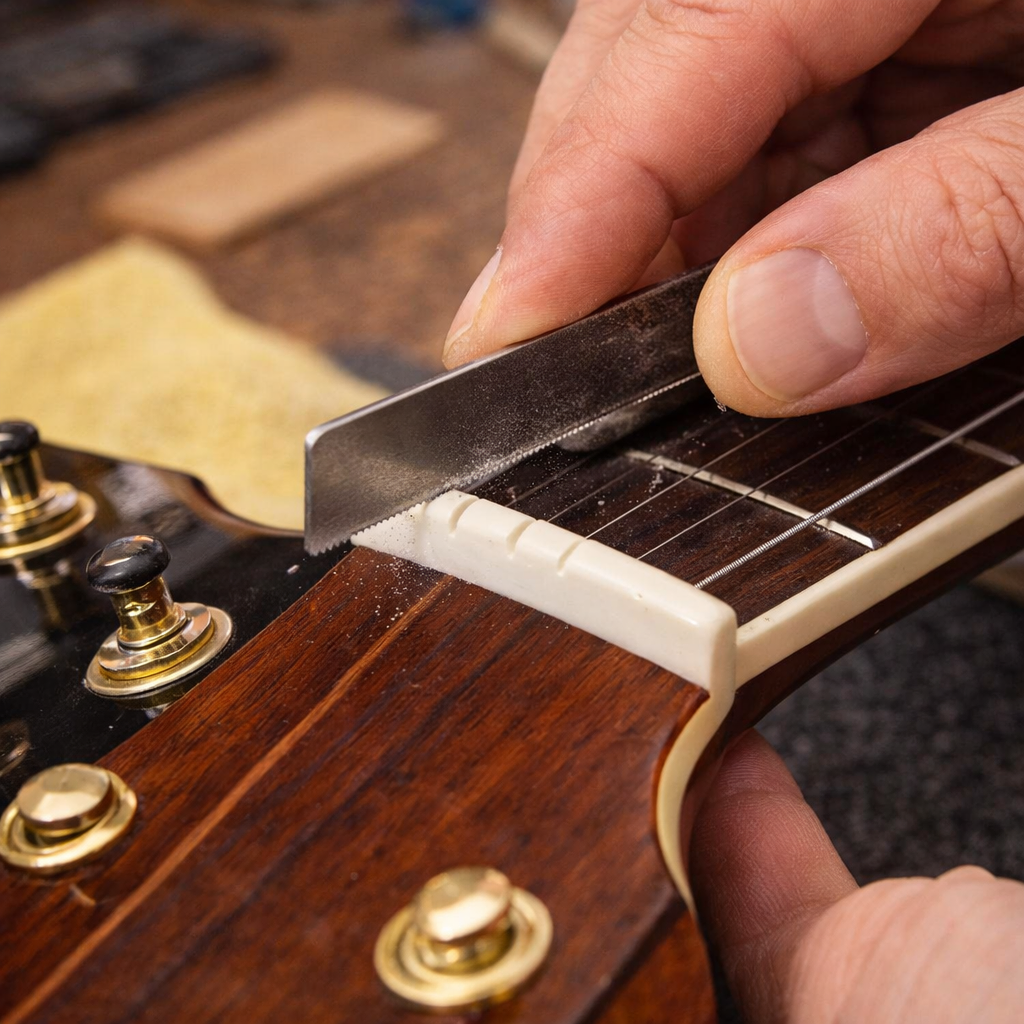
Guitar Nut Replacement Service - Custom Bone Nut Melbourne
At Angkor Music Melbourne, our professional nut replacement service at $140 all-inclusive addresses critical playability and tuning problems stemming from worn nut slots creating excessive string depth causing buzzing and intonation issues, cracked or broken nuts from impact damage or age-related degradation, cheap plastic nuts limiting tone transfer and sustaining capability, tuning instability from binding nut slots creating "pinging" during tuning as strings catch on rough slot edges then suddenly release, and action problems from incorrect nut height or slot depth making guitar difficult to play particularly in first position where nut geometry directly determines string height above frets. Located at 4-6 Drake Boulevard, Altona, we custom-cut genuine bone nuts rather than using pre-slotted alternatives ensuring proper fit matching your guitar's specific string spacing measured at bridge saddles, fretboard radius determining slot angle progression, nut width varying between guitar models and manufacturers, and string gauge requirements affecting slot width and depth - every guitar proves unique requiring custom nut cutting achieving optimal performance versus one-size-fits-all pre-slotted nuts creating compromises in string spacing accuracy, slot geometry, and overall fit quality. The $140 service includes genuine bone nut blank providing superior tone transfer versus plastic through greater density and hardness transmitting string vibration to neck efficiently improving sustain and tonal clarity, complete custom cutting using precision nut files measuring slot depth within thousandths of inch preventing buzzing from excessive depth or high action from insufficient depth, proper slot spacing matching bridge saddle positions ensuring parallel string paths preventing side pull causing tuning instability, slot angle cutting following fretboard radius creating appropriate string contact preventing binding or excessive wear, slot width filing matching string gauge preventing binding from tight slots or rattling from oversized slots, nut height shaping establishing proper string break angle over nut preventing insufficient downward pressure causing tuning problems or excessive angle creating string breakage risk, final polishing creating smooth slot surfaces allowing strings gliding freely during tuning preventing binding and pinging, and complete setup addressing neck relief affected by nut height change, action optimization accounting for new nut geometry, and intonation verification ensuring accurate pitch throughout fretboard - nut replacement without setup proves incomplete as nut height change affects overall action requiring comprehensive adjustment rather than assuming new nut solves problems without playability optimization. What distinguishes bone nuts from plastic alternatives commonly found in budget guitars stems from fundamental material property differences - bone's natural density approximately 1.7-1.9 g/cm³ versus plastic's 1.0-1.2 g/cm³ creates superior vibration transfer from strings to neck improving sustain and tonal resonance particularly noticeable in acoustic applications where nut material directly affects tone, bone's hardness resists wear maintaining slot geometry indefinitely while plastic compresses and wears creating progressively deeper slots requiring replacement every 2-3 years depending on playing frequency, bone's self-lubricating properties from natural oils within material reduce friction allowing smooth string movement during tuning versus plastic's grabby characteristics creating binding and pinging, and bone's organic composition provides warmer more natural tone versus plastic's synthetic character creating slightly sterile tonality. Common nut problems we address include worn slots where strings sink below nut surface indicating excessive wear requiring replacement before strings contact fretboard, cracked nuts from impact or stress concentration at slot bottoms particularly common on vintage guitars using brittle plastic, binding slots creating tuning instability as strings catch during tuning producing characteristic pinging sound when suddenly releasing from bind, incorrect slot spacing from factory errors or previous poor replacement creating string alignment problems, and general tone improvement from upgrading cheap plastic nuts to bone particularly valuable on mid-range guitars using decent pickups and electronics though compromised by inferior nut material limiting vibration transfer. The nut cutting process requires specialized skills and tools including precision nut files sized specifically for string gauges creating proper slot width, needle files for fine detail work and polishing, calipers measuring slot depth and spacing accurately, radius gauges matching fretboard curvature, straight edge verifying nut height relationship to fretboard, and years of experience understanding how slot geometry affects playability and tuning stability - attempting DIY nut cutting without proper tools and knowledge typically results in improperly cut nuts requiring professional correction costing more than initial professional installation. Installation timeframe proves 3-6 days allowing old nut removal without fretboard damage, bone blank fitting and initial shaping, precise slot cutting and spacing, complete setup addressing action and intonation changes, and quality verification testing nut function across all strings ensuring smooth tuning and proper action before return - rushed nut work creates problems from improper slot depth, incorrect spacing, or inadequate setup attention potentially wasting bone blank requiring complete replacement. Call us on (03) 8360 7799 to discuss nut replacement requirements or bring guitar experiencing nut problems for assessment determining whether replacement necessary or if simpler solutions like slot polishing or nut height adjustment address issues without complete replacement - honest diagnosis ensures appropriate service rather than unnecessary nut replacement when problems stem from other sources.
[PHOTO: Side-by-side worn nut with deep slots vs new bone nut with proper slots]
Why Replace Your Guitar Nut?
Guitar nut replacement addresses fundamental playability and tuning problems affecting guitar performance and player satisfaction. Understanding why nuts fail and recognizing symptoms requiring replacement helps players distinguish between problems solvable through nut work versus issues stemming from other sources requiring different solutions.
The worn nut slots represent most common nut problem particularly on guitars played frequently over years - strings gradually wear deeper slots in nut material eventually sinking below nut surface creating multiple problems including buzzing on open strings as strings contact first fret, intonation errors at first position as strings sit too low affecting pitch, and potential string breakage as sharp slot edges cut into strings. Plastic nuts wear faster than bone due to lower hardness - budget guitars using plastic nuts typically require replacement every 2-3 years with regular playing while bone nuts maintain slot geometry indefinitely under normal use. Visual inspection reveals worn slots - looking across nut from side shows strings sitting below nut surface rather than riding atop nut with appropriate clearance.
The cracked or broken nuts require immediate replacement preventing complete nut failure during playing - cracks typically develop at slot bottoms where stress concentration occurs from string tension particularly on unwound strings creating significant downward force in small area. Impact damage from dropping guitar also creates nut cracks or complete breaks. Vintage guitars prove particularly susceptible to nut cracking as old plastic becomes brittle over decades degrading from temperature cycling and UV exposure. Small cracks sometimes propagate slowly allowing continued use though monitoring proves essential preventing catastrophic failure, while significant cracks or complete breaks necessitate immediate replacement preventing further damage to guitar or injury from broken nut fragments.
The cheap plastic nuts on budget guitars limit tonal potential through poor vibration transfer - plastic's low density and soft composition absorb string energy rather than transmitting it efficiently to neck reducing sustain and tonal clarity particularly noticeable on acoustic guitars where nut material directly affects tone. Upgrading plastic nut to bone on mid-range guitar ($500-1,500) using decent pickups and electronics delivers noticeable improvement in sustain and tonal richness - many players report bone nut upgrade transforms guitar performance more than expected for relatively modest investment.
The tuning instability from binding nut slots creates frustrating playing experience - strings catching in rough or tight slots produce characteristic "pinging" sound during tuning as string suddenly releases from bind jumping to pitch unpredictably. The binding also causes tuning drift during playing particularly with string bending or vibrato use as strings bind when returning to original pitch requiring retuning. Properly cut polished nut slots eliminate binding allowing smooth string movement maintaining stable tuning through aggressive playing techniques. Some binding problems solve through slot polishing without complete nut replacement though severely worn or damaged slots require new nut achieving proper geometry.
The action problems from incorrect nut height affect playability particularly in first position - nut too high creates excessive action making first position chords difficult to fret requiring excessive finger pressure causing fatigue and intonation errors from pressing strings sharp, while nut too low creates buzzing on open strings from insufficient clearance between strings and first fret. Professional nut replacement establishes correct height relationship to fretboard ensuring appropriate string clearance without excessive height creating playability problems.
Bone vs Plastic vs TUSQ - Understanding Nut Materials
Nut material selection dramatically affects tone, sustain, tuning stability, and longevity creating substantial performance differences between materials despite nut's small size and simple appearance. Understanding material properties helps players appreciate bone nut upgrade benefits versus plastic or synthetic alternatives.
The genuine bone nuts provide superior performance through material properties evolved over millions of years - bone's natural density approximately 1.7-1.9 g/cm³ creates efficient vibration transfer from strings to neck improving sustain and tonal resonance as string energy transmits through nut rather than being absorbed by low-density materials. Bone's hardness resists wear maintaining slot geometry indefinitely under normal playing - properly cut bone nut lasts guitar's lifetime versus plastic requiring replacement every 2-3 years from wear. Bone's self-lubricating properties from natural oils within material reduce friction allowing smooth string movement during tuning preventing binding and pinging characterizing plastic nuts. The organic composition provides warm natural tone versus synthetic materials' slightly sterile character - subjective though many players and luthiers prefer bone's tonal characteristics particularly for acoustic applications where nut material affects overall tone substantially.
The plastic nuts found on budget guitars prove adequate for beginners though exhibit significant performance limitations versus bone - plastic's low density approximately 1.0-1.2 g/cm³ absorbs string vibration rather than transmitting it efficiently reducing sustain and tonal clarity, plastic's softness allows rapid wear particularly under string tension and tuning friction creating progressively deeper slots requiring eventual replacement, plastic's grabby surface creates binding during tuning producing pinging and tuning instability, and plastic's synthetic composition creates less desirable tone versus natural materials. Manufacturing cost drives plastic nut use - plastic nut costs manufacturer $2-3 versus bone nut at $8-12 creating significant savings multiplied across production volumes though compromising performance substantially. Players keeping budget guitars long-term benefit substantially from bone nut upgrade transforming playability and tone for modest $140 investment.
The TUSQ synthetic bone represents middle ground between plastic and genuine bone - developed by GraphTech as consistent alternative to natural bone addressing bone's variable properties from organic origin, TUSQ uses proprietary polymer formulation attempting to match bone's density and tonal characteristics while providing manufacturing consistency. TUSQ performs substantially better than cheap plastic though debate continues regarding comparison to genuine bone - TUSQ advocates cite consistency and self-lubricating properties while bone advocates prefer natural material's tonal warmth and proven track record over centuries of stringed instrument construction. TUSQ costs similarly to bone blank though requires identical cutting and fitting labor - we use genuine bone as our standard material based on traditional luthier preference and player satisfaction though TUSQ available upon request for players preferring synthetic consistency.
The brass and other metal nuts suit specific applications though prove less common than bone or synthetic materials - brass provides excellent sustain and bright tone though creates excessive string wear from hardness and proves unsuitable for guitars using wound strings on nut as metal-on-metal contact accelerates string breakage. Some players use brass nuts on slide guitars or specific tonal applications though bone remains most versatile choice suiting diverse playing styles and string types. Our recommendation defaults to genuine bone for most applications based on proven performance, player preference, and luthier tradition spanning centuries though honest discussion of alternatives allows informed material selection matching specific requirements.
[PHOTO: Bone blank vs plastic nut - visible density and quality difference]
The Custom Nut Cutting Process - Precision Craftsmanship
Custom nut cutting requires specialized tools, technical knowledge, and years of experience achieving proper slot geometry affecting playability and tuning stability dramatically despite nut's small size. Understanding cutting process complexity helps players appreciate professional service value versus DIY attempts potentially creating expensive mistakes requiring professional correction.
The nut blank fitting begins replacement process - bone blanks arrive oversized requiring shaping to match fretboard slot width, nut height, and string spread at nut position. Every guitar proves unique with different nut slot widths varying by manufacturer and model, required nut heights depending on fretboard geometry and desired action, and string spacing determined by bridge saddle positions. Professional fitting uses calipers measuring nut slot precisely, files and sandpaper shaping blank to exact width creating snug fit without gaps or excessive tightness, and careful height shaping establishing proper string break angle over nut preventing insufficient downward pressure causing tuning problems or excessive angle risking string breakage. The fitting accuracy determines overall nut function - loose nut rattles or shifts affecting tuning, while overly tight nut risks cracking during installation from excessive force.
The slot spacing measurement proves critical for proper string alignment - strings must run parallel from nut to bridge saddles preventing side pull creating tuning instability and excessive wear on nut slot edges. Professional spacing uses bridge saddle positions as reference measuring string-to-string spacing at bridge then calculating appropriate spacing at nut accounting for neck taper creating different string spread at nut versus bridge. Marking slot positions accurately on nut blank using calipers and straight edge ensures proper spacing before cutting - errors in marking create misaligned slots requiring new nut blank wasting material and time. Pre-slotted nuts use generic spacing suiting "average" guitars though rarely matching specific guitar's bridge saddle positions exactly creating compromise in string alignment.
The slot depth cutting requires extraordinary precision - slots too deep create buzzing as strings contact first fret, while slots too shallow create high action making guitar difficult to play. Proper slot depth positions string bottom approximately 0.010"-0.020" above first fret when string pressed at third fret - this clearance allows string vibration without buzz while maintaining low comfortable action. Professional nut cutting uses nut files sized specifically for string gauges creating proper slot width while controlling depth through careful incremental filing checking depth frequently with calipers or feeler gauges. The skill requirement proves substantial - experienced technicians achieve correct depth on first attempt through muscle memory and visual assessment, while inexperienced cutters often file slots too deep requiring complete nut replacement or too shallow requiring additional filing risking over-correction.
The slot angle cutting follows fretboard radius ensuring proper string contact in nut bottom - flat fretboards require relatively uniform slot depths across nut width, while curved fretboards demand progressively shallower outer slots matching radius curvature. Improper slot angles create high or low individual strings disrupting action consistency across strings. Professional cutting uses radius gauge matching fretboard curvature guiding slot depth progression ensuring proper geometry. The angle also affects forward/backward tilt - slots angle slightly backward toward headstock allowing smooth string exit preventing binding during tuning while avoiding excessive angle creating sharp edge cutting into strings.
The slot width filing matches string gauge preventing binding from undersized slots or rattling from oversized slots - proper slot width allows string dropping into slot smoothly though gripping string firmly preventing lateral movement. Nut files sized for specific string gauges (.009", .010", .011", etc.) create appropriate slot width though require skill preventing excessive widening from aggressive filing. Wound strings require wider slots than unwound strings of same gauge accommodating winding diameter - professional cutting accounts for string construction ensuring appropriate slot width throughout nut. Final polishing using fine sandpaper or polishing compound creates smooth slot surfaces eliminating file marks allowing strings gliding freely during tuning preventing binding and pinging.
Why Nut Replacement Requires Complete Setup
Nut replacement necessitates complete guitar setup as nut height change affects overall action, intonation at first position, and neck relief relationship to string height - attempting nut replacement without setup creates situation where new nut solves original problems while creating new playability issues from incomplete adjustment. Understanding setup necessity helps players appreciate $140 all-inclusive pricing versus separating nut work and setup creating higher total cost.
The nut height relationship to overall action proves direct - nut determines string height at zero fret position while bridge determines string height at opposite end of string creating string height gradient from nut to bridge affecting playability throughout neck. New nut with different height than original changes this gradient requiring bridge height adjustment compensating for nut change maintaining proper action progression. Additionally, nut height affects neck relief requirement - higher nut sometimes requires less relief as strings already elevated at nut end, while lower nut may require more relief preventing buzzing in middle fret positions. Professional setup addresses these relationships comprehensively ensuring guitar plays properly after nut replacement rather than assuming new nut height works with existing bridge and relief settings.
The intonation verification proves essential after nut replacement as nut slot depth affects string length at first fret position - strings sitting deeper in slots effectively lengthen slightly affecting intonation at first position even though bridge saddle positions remain unchanged. While effect proves subtle, accumulated small changes from nut replacement combined with setup adjustments potentially shift intonation requiring saddle position correction maintaining accurate pitch throughout fretboard. Professional approach checks intonation after nut installation and setup ensuring complete optimization rather than assuming nut work doesn't affect intonation.
The string replacement necessity during nut work makes setup timing optimal - removing old nut requires loosening strings, installing new nut requires stringing guitar for slot cutting verification, creating situation where fresh strings prove necessary. Performing complete setup simultaneously with nut replacement eliminates duplicate string removal saving time and cost versus separate nut work then setup requiring additional string changes. The all-inclusive $140 pricing includes nut replacement and setup recognizing these tasks naturally combine creating complete service rather than separating creating higher total cost and customer inconvenience.
[PHOTO: Close-up measuring slot depth - calipers or feeler gauge showing precision]
Signs You Need Nut Replacement
Recognizing symptoms indicating nut replacement helps players address problems before complete nut failure or excessive wear creates additional guitar damage. Understanding which symptoms require replacement versus simpler solutions like slot polishing or height adjustment ensures appropriate service avoiding unnecessary nut replacement when other solutions suffice.
The strings sinking below nut surface indicate severe wear requiring replacement - visual inspection from guitar side shows string bottoms sitting below nut top rather than riding atop nut with clearance. This condition creates buzzing on open strings as strings contact first fret, intonation problems from excessive string depth, and potential string breakage from sharp worn slot edges. Severe wear proves irreparable - attempting to raise strings through filling slots creates weak repair failing rapidly, while slot relocation proves impractical on small nut. Replacement with properly cut new nut provides only reliable solution restoring proper string height and geometry.
The buzzing only on open strings indicates nut slot depth problems - if fretting string at any fret eliminates buzz though open string buzzes, nut slots prove too deep allowing strings contacting first fret. Sometimes minor slot depth issues respond to nut height shim raising entire nut slightly though severe cases require replacement with new nut cut to proper depth. Professional diagnosis determines whether shimming proves viable or replacement necessary - bring guitar for assessment rather than assuming replacement required when simpler solutions may work.
The cracked or chipped nut requires replacement preventing catastrophic failure - small cracks sometimes stable allowing continued use particularly if crack doesn't penetrate completely through nut, though monitoring proves essential as cracks propagate under string tension potentially causing sudden complete failure. Significant cracks or chips affecting slot integrity necessitate immediate replacement preventing further damage. Impact damage from dropping guitar commonly creates nut cracks - inspection after any significant impact prevents surprise failures during playing.
The tuning instability with properly functioning tuners suggests nut slot binding - characteristic "pinging" during tuning as strings suddenly release from bind indicates rough or tight slots preventing smooth string movement. Sometimes slot polishing resolves binding without replacement though severely worn or damaged slots require new nut achieving proper geometry. Testing involves tuning string while listening for pinging or feeling resistance - smooth consistent tuning suggests proper slots while erratic tuning with pinging indicates binding requiring attention.
The action too high or low at first fret compared to rest of neck indicates nut height problems - if action feels comfortable beyond third fret though first position proves difficult, nut height likely incorrect. Excessively high nut creates difficult first position playing requiring excessive pressure, while low nut creates buzzing. Proper nut height establishes smooth action progression from nut through bridge allowing comfortable playing throughout neck. Nut replacement opportunity allows establishing correct height matching player preference and guitar geometry.
Pre-Slotted vs Custom Cut Nuts
Pre-slotted nut blanks arrive from manufacturers with generic slot spacing and depths suiting "average" guitars though rarely matching specific instrument requirements exactly. Understanding pre-slotted limitations versus custom cutting benefits helps players appreciate professional service value delivering proper fit rather than acceptable compromise.
The pre-slotted nut advantages include reduced installation time as slots already cut requiring only depth and width refinement, lower labor cost from less cutting work required, and adequate performance for guitars where precise slot spacing proves less critical. Some repair shops use pre-slotted nuts reducing service cost though compromising fit quality - slots spacing may not match bridge saddle positions exactly creating slight string alignment issues, slot depths require adjustment matching specific guitar's fretboard geometry, and slot widths may not suit customer's preferred string gauge requiring filing. Pre-slotted approach proves acceptable for budget guitars or situations prioritizing cost over optimal fit though custom cutting delivers superior results for mid-range and higher-end instruments.
The custom cut nut advantages include exact slot spacing matching bridge saddle positions ensuring parallel string paths preventing side pull and tuning instability, precise slot depths suited to specific guitar's fretboard radius and desired action height, proper slot widths matching actual string gauges used rather than assumed gauges, and complete control over nut height and break angle optimizing for specific guitar and player preference. Custom cutting requires more labor increasing service cost though delivers optimal performance justifying investment particularly for guitars worth keeping long-term. Our approach uses custom cutting exclusively ensuring proper fit rather than accepting pre-slotted compromises - the difference between adequate and optimal proves worthwhile for most players seeking best possible guitar performance.
The string spacing accuracy proves particularly important - pre-slotted nuts use standardized spacing (typically Fender or Gibson spacing) though many guitars use non-standard spacing requiring custom slot placement. Mismatched spacing creates string alignment problems causing uneven nut slot wear, tuning stability issues from side pull on strings, and aesthetic problems with strings appearing misaligned. Custom cutting measures actual bridge saddle positions calculating appropriate nut spacing ensuring strings run truly parallel rather than assuming guitar conforms to standard spacing creating potential alignment issues.
Book Professional Nut Replacement Service
$140 All-Inclusive - Bone Nut & Setup
Nut replacement $140 includes genuine bone nut blank, complete custom cutting matching your guitar's specific string spacing and fretboard radius, proper slot depth for optimal action, complete setup addressing relief and intonation changes. Strings $12-18 additional. Superior tone and sustain versus plastic. Lifetime durability. 3-6 day turnaround.
Custom Cut - Never Pre-Slotted
We custom-cut every nut ensuring proper fit matching YOUR guitar's specifications. Slot spacing measured from bridge saddles ensuring parallel strings, slot depths suited to fretboard radius and action preference, slot widths matching actual string gauges. Precision work using specialized nut files and years of experience achieving proper geometry on first attempt. No pre-slotted compromises - complete custom work for optimal performance.
Genuine Bone - Superior Material
Genuine bone provides superior tone transfer versus plastic through greater density efficiently transmitting string vibration to neck improving sustain and clarity. Bone's hardness resists wear maintaining slot geometry indefinitely while plastic compresses requiring replacement every 2-3 years. Self-lubricating properties reduce friction preventing binding and tuning instability. Warm natural tone versus plastic's sterile character. Premium material delivering professional performance.
Expert Precision Cutting
Nut cutting requires precision within thousandths of inch - slots too deep create buzzing, too shallow raise action unacceptably. Our experienced technicians achieve correct geometry using specialized nut files, calipers, radius gauges ensuring proper slot depth, spacing, angle. Years of experience allow accurate cutting on first attempt avoiding trial-and-error wasting materials. Visit 4-6 Drake Boulevard, Altona or call (03) 8360 7799 to schedule nut replacement.
Nut Replacement Pricing Melbourne
Standard Nut Replacement - $140
Complete nut replacement $140 all-inclusive includes genuine bone nut blank, complete custom cutting matching string spacing and fretboard radius, proper slot depth and width, final polishing, complete setup addressing relief and intonation. Strings $12-18 additional as old strings removed during nut work. Standard turnaround 3-6 days allowing proper cutting, setup, quality verification. Best value upgrade delivering improved tone, sustain, tuning stability. Call (03) 8360 7799 to schedule nut replacement.
Nut + Fret Dress Package - $425
Combine nut replacement $140 with fret dress $285. Total $425 addressing nut and fret problems comprehensively. Both services require setup allowing economical combination - single setup covers both services rather than separate setups if performed independently. Guitar requiring fret work often benefits from nut replacement simultaneously as nut wear typically corresponds with fret wear on well-used guitars. Combined turnaround 3-6 days. Complete playability transformation.
TUSQ Synthetic Nut - $140
TUSQ synthetic bone available upon request at same $140 price including custom cutting and setup. TUSQ provides consistent alternative to natural bone addressing organic material variability though debate continues regarding tonal comparison. We default to genuine bone based on luthier tradition and player preference though TUSQ suits players preferring synthetic consistency or ethical concerns about animal products. Call (03) 8360 7799 discussing material preference when scheduling nut replacement service.
Assessment & Simple Repairs - Free-$40
Bring guitar for free nut assessment determining whether replacement necessary or simpler solutions suffice. Sometimes slot polishing resolves binding without replacement (typically $40 service), or nut height shim addresses minor depth issues avoiding complete replacement. Honest diagnosis ensures appropriate service rather than unnecessary nut replacement when other solutions work. If replacement needed, $140 service delivers complete custom bone nut with setup. Walk-ins welcome or call (03) 8360 7799 scheduling assessment.
[PHOTO: Completed installation - new bone nut on guitar showing professional cutting]
Frequently Asked Questions - Nut Replacement Melbourne
How much does nut replacement cost?
Professional nut replacement costs $140 all-inclusive including genuine bone nut blank, complete custom cutting, and setup. Strings $12-18 additional. Price includes slot spacing matched to bridge saddles, proper slot depth for optimal action, slot width suited to string gauge, nut height shaping, final polishing, complete setup addressing relief and intonation. Turnaround 3-6 days. TUSQ synthetic available same price upon request. Walk-ins welcome for free assessment or call (03) 8360 7799 to schedule nut replacement service.
Why replace plastic nut with bone?
Bone provides superior tone transfer versus plastic through greater density (1.7-1.9 g/cm³ vs 1.0-1.2 g/cm³) efficiently transmitting string vibration to neck improving sustain and clarity particularly noticeable on acoustic guitars. Bone's hardness resists wear maintaining slot geometry indefinitely while plastic compresses requiring replacement every 2-3 years. Bone's self-lubricating properties reduce friction preventing binding and tuning instability common with plastic. Warm natural tone versus plastic's sterile character. The $140 investment delivers noticeable improvement particularly on mid-range guitars using decent pickups and electronics though compromised by inferior plastic nut. Call (03) 8360 7799 discussing bone nut upgrade benefits for your specific guitar.
How do I know if my nut needs replacing?
Signs requiring nut replacement include strings sinking below nut surface (severe wear), buzzing only on open strings (slots too deep), cracked or chipped nut (damage), tuning instability with pinging during tuning (binding slots), action too high or low at first fret (incorrect nut height). Bring guitar for free assessment determining whether replacement necessary or simpler solutions like slot polishing or height shim suffice. Sometimes minor problems solve without complete replacement though severely worn or damaged nuts require new nut achieving proper geometry. Call (03) 8360 7799 or visit 4-6 Drake Boulevard, Altona for professional nut assessment and honest diagnosis.
What is custom nut cutting?
Custom nut cutting involves fitting bone blank to fretboard slot, marking slot positions matching bridge saddle spacing, cutting slots to precise depth (within 0.001") preventing buzzing or high action, filing slot widths matching string gauge, cutting slot angles following fretboard radius, shaping nut height for proper break angle, final polishing creating smooth surfaces. Every guitar proves unique requiring custom work matching specific string spacing, fretboard radius, nut width, string gauge. Pre-slotted nuts use generic spacing rarely matching specific guitar exactly creating compromises. Custom cutting delivers optimal fit ensuring parallel strings, proper action, smooth tuning. Professional cutting requires specialized files, measuring tools, years of experience achieving correct geometry on first attempt avoiding costly errors.
Why does nut replacement require setup?
Nut replacement requires complete setup as nut height change affects overall action requiring bridge adjustment, intonation at first position may shift from new slot depths, and neck relief relationship to string height requires verification. New nut without setup solves nut problems while potentially creating playability issues from incomplete adjustment. Additionally, nut work requires string removal making setup timing optimal as fresh strings needed anyway. The $140 all-inclusive price recognizes nut work and setup naturally combine rather than separating creating higher total cost and duplicate string changes. Professional approach addresses all factors comprehensively ensuring guitar plays properly after nut replacement.
Can I replace guitar nut myself?
DIY nut replacement possible though requires specialized tools (nut files, needle files, calipers, radius gauge), technical knowledge (proper slot depth, spacing calculation, angle cutting), and skill achieving precision within thousandths of inch. Common DIY mistakes include slots cut too deep creating buzzing or too shallow raising action, incorrect spacing from measurement errors, wrong slot angles from radius mismatch, damaged nut from aggressive filing, finish damage from tools, improper nut height. Mistakes require professional correction potentially costing more than initial professional installation wasting bone blank and time. For $140 all-inclusive professional service ensuring proper execution including setup, most players find professional nut replacement worthwhile avoiding costly DIY errors. Call (03) 8360 7799 to schedule professional nut replacement service.
How long does nut replacement take?
Nut replacement with setup typically requires 3-6 days turnaround allowing old nut removal, bone blank fitting and shaping, precise slot cutting and spacing, complete setup addressing action and intonation, quality verification. Actual cutting work takes 2-3 hours though multi-day timeframe ensures optimal scheduling and proper setup procedures. Rushing nut work creates problems from improper slot depth, incorrect spacing, or inadequate setup attention potentially wasting bone blank requiring complete replacement. Priority servicing available adding 50% rush fee though quality work benefits from allowing appropriate time for careful execution. Combined with fret dress or other services allow 3-6 day combined turnaround. Call (03) 8360 7799 discussing specific timing requirements.
What's the difference between bone and TUSQ?
Bone provides natural organic material with proven track record over centuries of stringed instrument construction delivering warm tone and excellent vibration transfer. TUSQ synthetic bone developed by GraphTech provides consistent alternative addressing bone's variable properties from organic origin using proprietary polymer formulation. Performance debate continues - TUSQ advocates cite consistency and self-lubricating properties while bone advocates prefer natural material's tonal warmth and luthier tradition. Both perform substantially better than cheap plastic. We default to genuine bone based on traditional preference though TUSQ available same $140 price upon request. Material choice proves somewhat subjective - both deliver professional performance. Call (03) 8360 7799 discussing material preference when scheduling nut replacement.
Is nut replacement worth it for cheap guitars?
Nut replacement at $140 proves worthwhile for guitars worth keeping long-term regardless of original purchase price. Budget guitars under $300 may not justify $140 investment approaching guitar replacement cost though players attached to specific guitars or beginners committed to learning benefit substantially from bone nut upgrade transforming playability and tone. Mid-range guitars ($500-1,500) using decent pickups and electronics though compromised by cheap plastic nuts benefit dramatically from bone upgrade - many players report $140 nut replacement improves guitar more than expected for modest investment. Higher-end guitars deserve bone nuts matching overall quality. Honest assessment considers guitar value and player attachment determining whether $140 investment appropriate. Call (03) 8360 7799 for upgrade suitability discussion.
Where can I get nut replacement in Melbourne?
Book professional nut replacement service at Angkor Music Melbourne located at 4-6 Drake Boulevard, Altona VIC 3018. Service costs $140 all-inclusive including genuine bone nut, complete custom cutting, setup. Walk-ins welcome for free assessment determining whether replacement necessary or simpler solutions suffice. Same-day assessment available subject to technician schedule. Standard turnaround 3-6 days ensuring proper cutting, setup, quality verification. Our Altona workshop serves Melbourne players seeking professional nut replacement using quality materials and expert craftsmanship. Honest diagnosis ensures appropriate service avoiding unnecessary replacement when other solutions work. Visit 4-6 Drake Boulevard, Altona or call (03) 8360 7799 to schedule nut replacement with setup.
Schedule Your Nut Replacement Service
Custom Bone Nut Replacement $140 - Superior Tone & Tuning Stability
Genuine bone. Custom cut to your guitar. Setup included. Lifetime durability. 3-6 day turnaround.
Angkor Music Melbourne | 4-6 Drake Boulevard, Altona VIC 3018 | Professional Nut Replacement
| SKU | NUT-REPLACEMENT-001 |
Be The First To Review This Product!
Help other Angkor Music users shop smarter by writing reviews for products you have purchased.